

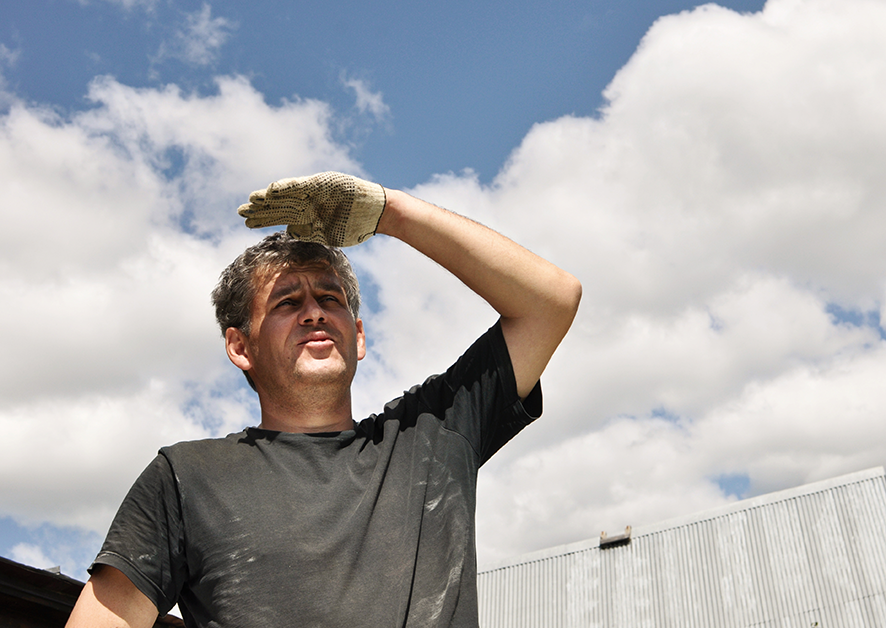
For Australia’s tradies, long days outdoors come with the job.
But despite spending so much time in the sun, eye protection isn’t something many think much about – at least not until problems start showing up.
That was the case for Jason Hollier, a Sydney-based carpenter and builder who has spent more than 25 years working outside.
“I definitely wasn’t thinking about protecting my eyes when I was younger,” he told news.com.au. “You feel invincible. You don’t have any problems so you don’t think there’s any cause for concern.”
Hollier regularly clocked eight to 12 hours a day on site, six days a week. Add in weekends spent surfing and fishing, and the sun exposure quickly stacked up.
“The glare is something I always just put up with,” he said. “I don’t know why you do, it probably just takes a while to get used to working in glasses.”
It took until his late 20s for him to realise something wasn’t right.
“I started noticing my eyes were constantly bloodshot, with little growths creeping across,” he said. “Friends I grew up with ended up having to get their eyes scraped. That was when I really started to realise I needed to look after them.”
But things didn’t really change until he was working on larger sites.
“When I started working for the bigger companies, it was non-negotiable,” he said. “You had to wear glasses all day, every day.”
At first it was a pain and took getting used to but once he did, he realised how much it actually helped.
“If I was working for myself, I probably would’ve still been slack, because it’s easier not to bother. But once it becomes routine, you realise how much better it is.”
These days, sunglasses are part of Hollier’s everyday routine, both on and off the job.
“It’s just a no-brainer now,” he said. “I’ve always got a pair around – in the car, at home, wherever. You don’t even think about it anymore.”
After years of just putting up with glare, Hollier also started paying more attention to the type of sunglasses he was wearing.
“I’m at the beach a lot, I do a bit of fishing, so polarised is a no-brainer for me,” he said. “It cuts the glare. I mean UV protection is the standard regardless and polarised just takes it to the next level.”
According to optometrist Dr Joe Paul, UV damage to the eyes can build up without people realising.
“Like skin, UV can cause both short and long-term damage to the eyes,” he said.
“If sunglasses don’t offer full UV protection, your eyes are still at risk of damage from long-term UV exposure – from sunburn-like damage through to an increased risk of eye diseases like cataracts and pterygiums.”
Hollier knows that risk first-hand, after developing cataracts earlier than expected.
“I actually had cataracts before my mum,” he said. “They couldn’t say exactly what caused it, but it definitely made me take eye protection seriously.”
Now, his message to younger tradies is simple.
“If I could go back, I’d make sunglasses non-negotiable from a really early age – like wearing a seatbelt,” he said. “You don’t even think about it, you just do it.”
Looking back, it’s something he’d do differently now.
“I wish I’d treated eye protection the same way I treat sunscreen now,” he said. “Just part of looking after yourself.”
Article by Melody Teh