



When you think of a wine cellar, your mind might picture a subterranean dugout brimming with dusty old bottles. It’s cold and crowded, even a little creepy. It’s a novelty to visit, sure, but not as comfy as your neighbourhood wine bar.
That’s all changing with a fresh wave of designers crafting architecturally integrated wine rooms that prioritise fun as much as function (and get as much design focus as a living room or kitchen). “People who enjoy wine want to share it, use it and enjoy it – rather than having it as a trophy or a piece of sculpture in the house,” says Nickolas Gurtler, who runs his eponymous interior design firm in Prahran, Melbourne.
The award-winning designer has noticed an increased demand for dedicated wine rooms where clients can escape, relax and entertain. “There’s been a conscious social change away from mass drinking and towards really enjoying wine. That’s what these rooms are fantastic for,” he says. Sydney-based interior design firm Arent & Pyke is also noticing the trend. “We’re receiving more requests to showcase wine collections more prominently in homes,” says principal Sarah-Jane Pyke. “It’s a real treat to take guests into wine rooms, so it’s ideal when a climate-controlled cellar can sit within entertaining spaces.”
In one home, Gurtler used warm white lighting and earthy accents to turn a dark basement space into an enticing wine room. “The space wasn’t large, so we wanted to make sure that it felt comfortable, inviting and beautiful to walk past,” he says. Along a central wall, recessed shelves cradle room-temperature bottles, which glow under panels of soft light. There’s also a temperature-controlled fridge for more bottles and a bar station for pouring and washing glasses.
Sydney-based designer Thomas Hamel creates a similar sense of intimacy in a wine room as part of an Italianate-style villa in Melbourne. Custom timber joinery, a bespoke chandelier from Jonathan Browning, fluted bronze and antique mirror details pair with a textural Venetian plaster ceiling. “Materials that evoke a sense of richness and age work well in cellars,” Hamel says.
For Gurtler, layered lighting is a secret weapon in designing a versatile wine room. “Maybe you’re celebrating and you want it to be a little bit brighter. Or maybe … you want to sit down and swirl a merlot around and be moody,” he says. Hamel says lighting needs to be both atmospheric and practical. “Wine connoisseurs take their cue from colour to determine both age and varietal.” Pyke agrees: “The spaces require very low light levels to ensure the bottles age well.”
Colour also plays a crucial role in building atmosphere, from the walls to the furniture. Gurtler opted for cream-white walls in the space to counteract the lack of natural light. For Hamel, his first instinct is towards hues that evoke warmth like rich terracottas or claret reds. “That said, some clients prefer to take the opposite path, opting for deep navies or sapphire blues for a cooler, more dramatic effect.”
As for furniture, all three firms suggest using natural materials to nod to wine’s roots. “We use a lot of wood because there’s a natural harmonisation with wine barrels,” Gurtler says. Think tactile materials like bouclé, rattan, oak, American walnut, poplar burl and leather. “We choose natural textures that will age [and patina] beautifully. And things that people aren’t afraid to use and sit on.”
Beyond aesthetics, there’s also a growing emphasis on how these spaces function day to day. Increasingly, wine rooms are being designed with flexibility in mind – accommodating everything from intimate tastings to larger social gatherings. Modular seating, concealed storage and adaptable shelving systems allow the room to evolve depending on the occasion. A quiet midweek glass might call for a pared-back, softly lit setting, while a weekend gathering could see the space transformed into a lively entertaining hub, with standing room, open bottles on display and music filtering through integrated sound systems.
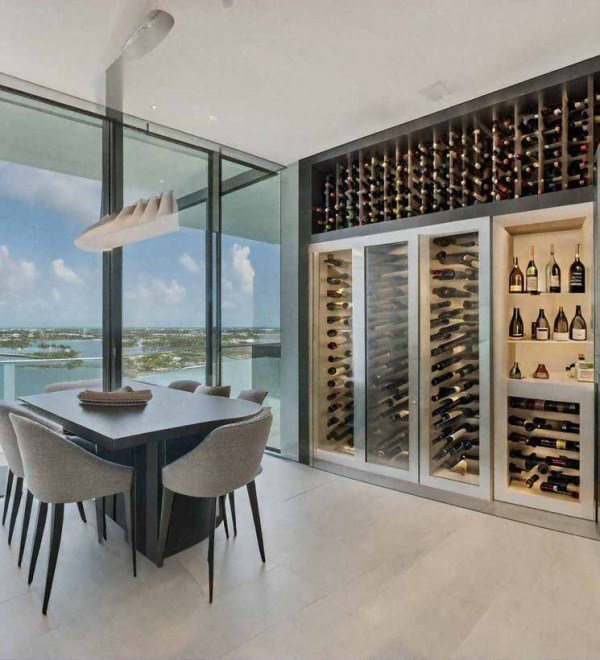
Temperature control, once the defining feature of a cellar, has become more sophisticated and discreet. Rather than bulky refrigeration units dominating the room, designers are integrating climate systems seamlessly into joinery and architecture. Zoned cooling allows collectors to store different varietals at optimal conditions, while maintaining a comfortable ambient temperature for guests. Advances in glazing technology also mean that glass-enclosed wine rooms, often positioned within open-plan living areas, can maintain strict climate requirements without compromising visual connection.
This transparency has, in turn, elevated the wine room into a visual centrepiece. No longer hidden away, collections are displayed with intention, often curated as carefully as an art wall. Bottles are arranged by region, vintage or label design, creating a layered narrative that invites conversation. In some homes, rotating displays highlight seasonal selections or recent acquisitions, reinforcing the idea that a wine collection is something to be engaged with, rather than archived.
But perhaps the most significant evolution is how wine rooms now sit within a broader ecosystem of lifestyle amenities in high-end residential design. Rather than existing in isolation, the modern cellar is often conceived as one component within a suite of bespoke spaces tailored to a client’s passions and routines. It’s not unusual to find wine rooms integrated alongside private tennis courts, bowling lanes, cinema rooms and expansive wellness zones complete with saunas, steam rooms and spa facilities.
In these homes, the wine room becomes part of a larger narrative about leisure and retreat. A game of tennis might be followed by a cooldown in the spa and a glass of chilled white in a nearby cellar lounge. Guests might move from a bowling lane to a wine tasting, or gather around a display wall before heading into a dining space. The transitions between these areas are carefully choreographed, with materials, lighting and spatial flow used to create a sense of cohesion throughout.
Car collectors, too, are influencing how wine rooms are positioned and experienced. With the rise of car lifts and gallery-style garages, some homes now feature direct visual links between automotive displays and wine collections. Glass walls, mirrored surfaces and consistent material palettes create a dialogue between the two, turning both into curated exhibitions within the home. In this context, the wine room shares the same level of reverence as a rare vehicle – not simply stored, but celebrated.
At the more playful end of the spectrum, some clients are requesting unexpected adjacencies that reflect a broader shift towards experiential living. It’s not unheard of for a wine room to sit near a games zone, a music studio or even an indoor skate park – spaces that prioritise movement, creativity and social interaction. While these pairings might seem unconventional, they speak to a desire for homes that feel dynamic and personalised, rather than formal or prescriptive. The wine room, in these cases, acts as a grounding element, a place to slow down and reconnect amid more energetic pursuits.
Wellness is another key driver shaping the evolution of cellar design. As spa facilities become more prominent in residential projects, designers are exploring how wine rooms can complement these restorative environments. This might involve softer lighting schemes, natural materials with tactile warmth, and a stronger emphasis on acoustics to create a sense of calm. In some instances, wine rooms are designed as transitional spaces between wet and dry zones, offering a moment of pause between a sauna session and a return to the main living areas.
Importantly, this integration doesn’t diminish the technical precision required to store wine properly. Instead, it challenges designers to balance performance with atmosphere – ensuring that temperature, humidity and light levels are carefully controlled, even as the space opens up to the rest of the home. The result is a new kind of cellar: one that respects tradition, but isn’t bound by it.
Ultimately, the rise of at-home wine rooms reflects a broader rethinking of what luxury means in a domestic setting. It’s less about accumulation and more about experience – about creating spaces that invite use, encourage connection and adapt to the rhythms of everyday life. Whether nestled within a quiet corner or positioned at the heart of an expansive entertainment zone, the modern wine room is no longer a hidden archive. It’s a living, breathing part of the home – designed not just to house a collection, but to bring it to life.