

As cities continue to grow upwards, the demand for high-rise buildings has surged. These towering structures require cutting-edge structural engineering techniques to ensure safety, stability, and efficiency. Advances in materials, design, and technology have enabled engineers to expand the limits of high-rise construction. In this blog, we’ll explore some of the most innovative structural engineering techniques that are transforming the construction of high-rise buildings.
Advanced Building Materials
The development of new and innovative materials is one of the driving forces behind the evolution of high-rise construction.These materials offer enhanced strength, durability, and sustainability. Key advancements include:
• High-Strength Concrete: High-strength concrete is designed to withstand higher loads, making it ideal for the foundations and core structures of skyscrapers. Its improved properties allow for thinner walls, reducing the overall weight and footprint of the building.
• Carbon Fiber Reinforced Polymers (CFRP): CFRP is increasingly being used for strengthening and retrofitting high-rise structures. It’s lightweight, strong, and resistant to corrosion, making it ideal for improving the load-bearing capacity of existing buildings or providing additional support to new projects.
• Glass and Steel Innovations: Modern glass materials and steel alloys are stronger, lighter, and more flexible than their predecessors.
This enables architects and to design buildings with larger windows, more open spaces, and sleeker, more aesthetically appealing structures without compromising structural integrity. By using these materials, engineers can create taller, more resilient, and energy-efficient high-rise buildings.
Smart Building Design with Parametric Modelling
Parametric design uses algorithms to generate complex and efficient structural designs based on specified parameters such as height, load distribution, and environmental conditions. It allows for optimized designs that respond to a variety of factors, including wind loads, seismic activity, and building function. This approach helps engineers:
• Optimise Structural Elements: By analysing and simulating the behaviour of the structure, parametric modelling allows engineers to identify the most efficient materials and shapes for beams, columns, and floors. This can lead to lighter, stronger, and more costeffective structures.
• Adapt to Site-Specific Conditions: Parametric design tools can integrate geotechnical and environmental data, allowing for customized designs that are tailored to the specific location and conditions of the site. This technique enables architects and engineers to create buildings that are not only structurally sound but also adaptable to the evolving needs of urban spaces.
Tuned Mass Dampers
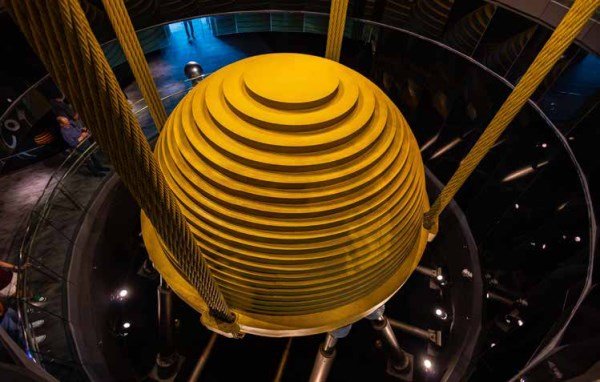
High-rise buildings are susceptible to sway caused by wind forces and seismic activity. To mitigate this movement and enhance stability, engineers have developed tuned mass dampers. These devices are designed to reduce the amplitude of oscillations by absorbing and dissipating the energy from external forces. They are typically installed at the top of tall buildings and consist of:
• A large mass that moves in the opposite direction to the building’s sway.
• A damping system, such as hydraulic pistons or friction, that absorbs the energy from the movement. The use of tuned mass dampers has allowed high-rise buildings to be constructed in areas with high wind loads or seismic risks, without compromising occupant comfort or safety. Famous examples include the Taipei 101 Tower and the Burj Khalifa.
Vertical Transportation Optimisation
One of the biggest challenges in high-rise buildings is efficiently moving people between floors. With increasing building heights, traditional elevator systems can become inefficient and time-consuming. To overcome this challenge, engineers have developed innovative vertical transportation techniques, such as:
• Double-Decker Elevators: These elevators are designed with two stacked cabins, allowing them to transport more passengers at once. This increases efficiency and reduces wait times.
• Destination Dispatch Systems: In this system, passengers input their destination floor before entering the elevator. The system then groups passengers traveling to the same or nearby floors, reducing the number of stops and improving travel time.
• Ropeless Elevators: Companies like Thyssenkrupp have developed ropeless, magnetic levitation elevators, which move both vertically and horizontally. These systems offer greater flexibility in tall buildings, allowing elevators to travel at higher speeds and with more efficiency. By optimising vertical transportation, developers can enhance the functionality and convenience of high-rise buildings, while reducing energy consumption.
• Seismic and Wind Engineering: High-rise buildings experience significant effects from seismic and wind forces because of their height and mass. To counteract these forces, engineers use a combination of advanced structural systems and materials:
• Shear Walls and Braced Frames: These structural elements are designed to resist lateral forces, such as those from earthquakes and high winds. Shear walls are vertical elements that provide resistance to torsion and bending, while braced frames use diagonal braces to provide stability.
• Flexible Building Designs: To protect against seismic activity, modern high-rise buildings are designed with flexibility in mind. These structures can bend and sway in response to movement without sustaining damage, preventing failure during an earthquake.
• Aerodynamic Shapes: Engineers are also focusing on the shape of high-rise buildings to minimise wind resistance. Aerodynamically shaped buildings are designed to direct wind flow around the structure, reducing the forces exerted on the building and preventing excessive sway. These techniques help ensure that high-rise buildings can withstand extreme weather events and seismic activity, ensuring the safety of both the structure and its occupants.
Sustainable and Green Building Techniques
Sustainability is a growing concern in the construction industry, and high-rise buildings are no exception. Structural engineers are adopting innovative techniques to make tall buildings more energy-efficient and environmentally friendly, including:
• Green Roofs and Vertical Gardens: Incorporating green spaces into the design of high-rise buildings not only helps to improve air quality but also reduces the heat island effect in urban areas. These roofs and gardens also provide insulation, lowering energy costs.
• Energy-Efficient Facades: High-performance facades made from insulated glass and smart materials can help reduce heat gain and loss, improving energy efficiency. Solar panels and wind turbines are also being integrated into the building’s exterior to generate renewable energy.
• Recycling Construction Waste: Engineers are now focusing on using recycled materials in high-rise construction, reducing waste and promoting sustainable practices. By implementing these green building techniques, engineers and developers can create high-rise buildings that are not only structurally sound but also environmentally responsible.
Modular and Prefabricated Construction Modular and prefabricated construction techniques have gained popularity in high-rise building projects. By manufacturing components off-site and assembling them on-site, these methods offer several advantages:
• Faster Construction: Prefabrication allows for faster construction timelines, as multiple components can be manufactured simultaneously while site preparation work is underway.
• Reduced Costs: The controlled environment of prefabrication reduces material waste and improves quality control, leading to lower overall construction costs.
• Improved Safety: With fewer workers required on-site and reduced exposure to environmental conditions, modular construction can improve worker safety.
By using modular and prefabricated systems, developers can streamline the construction process, reduce costs, and create high-rise buildings more efficiently.
The construction of high-rise buildings requires innovative and forward-thinking structural engineering techniques to meet the demands of modern urbanisation. From advanced materials and flexible designs to sustainable practices and improved transportation systems, engineers are constantly pushing the envelope to create safer, more efficient, and environmentally friendly highrise buildings.