
What Clients Should Actually Know
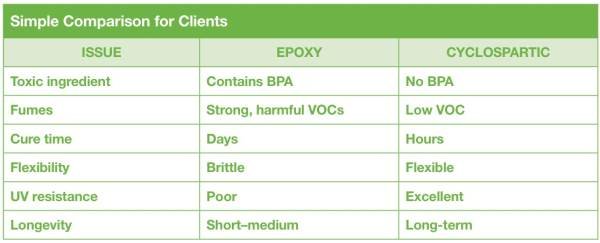
The Core Issue with Epoxy coatings are toxic while in liquid form and become brittle once cured.
The problem is not opinion — i t’s chemistry.
The Main Problematic Chemical in Epoxy Bisphenol A (BPA)
• BPA is a petroleum-based chemical
• It is the primary building block of epoxy resin
• BPA is classified as:
• Toxic in liquid form
• Environmentally unstable
• Harmful if inhaled or absorbed through skin
What Creates the Strong Epoxy Fumes – Epoxy coatings release fumes because they contain:
• Bisphenol A (BPA) epoxy resin
• Amine hardeners (used to cure the epoxy)
• Volatile Organic Compounds (VOCs) from solvents and additives
When mixed, these chemicals off-gas aggressively during curing.
That’s why:
• Epoxy smells strong
• Garages must be ventilated
• People and pets are advised to stay away
• Cure times are long (days, not hours)
Why Epoxy Fails Over Time – Once epoxy cures, it becomes:
• Hard and brittle
• Unable to flex with concrete movement
• Prone to:
• Cracking
• Peeling
• Delamination
• Yellowing from UV exposure
Concrete moves. Epoxy does not. That mismatch is why epoxy fails.
Why Cyclospartic Is Different.
Cyclospartic coatings are not epoxy and do not contain BPA.
Key Advantages
• Low-VOC chemistry: Minimal fumes during installation
• No Bisphenol A (BPA): Safer for people, pets, and the environment
• Fast cure: Same-day return to service
• Flexible, not brittle: Moves with the concrete
• UV stable: Will not yellow or degrade
Cyclospartic is designed for industrial, commercial, and premium residential use — not hardware-store performance.
The Bottom Line
Epoxy coatings:
• Contain Bisphenol A (BPA)
• Produce toxic fumes while liquid
• Become brittle and fail over time
Cyclospartic coatings:
• Are safer during installation
• Are environmentally more responsible
• Last longer and perform better
That’s why Garage Force does not use epoxy — and why we only install Cyclospartic systems.