
September 5, 2026 by SafetyCheck
When a trade contractor arrives on site, one of the first things most builders ask for is a Safe Work Method Statement. For small Aussie tradies that can feel like paperwork. For builders and principal contractors, a clear SWMS confirms high-risk work has been thought through before anyone starts.
Below we discuss when a SWMS is required, what a good one includes, and how builders can get useful documents from subcontractors. For the full walkthrough, see SafetyCheck’s complete SWMS guide for small Aussie tradies.
When a SWMS is required
Under Australian WHS rules, a SWMS is needed for High Risk Construction Work(HRCW) — including work at heights above two metres, near energised electrical installations, excavation, demolition, confined spaces, asbestos and work near traffic corridors. If the task sits in one of those categories, the SWMS should be in place before work begins.
Who prepares it?
Usually the contractor doing the work prepares the SWMS, because they know the tasks and risks best. Builders, principal contractors and the Person Conducting a Business or Undertaking (PCBU) still review and approve documents before work starts. Workers need to follow the agreed safe methods in the SWMS.
What a useful SWMS looks like
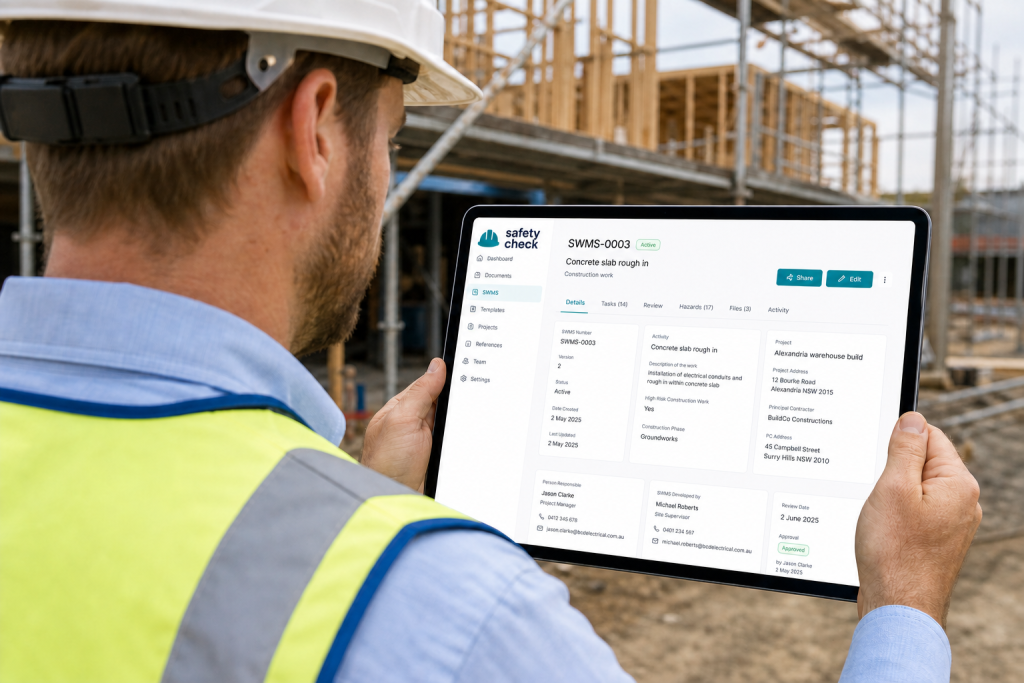
A practical SWMS should cover scope of work, job steps, hazards, control measures, PPE, plant and equipment, emergency procedures, and worker consultation and sign-off. SafetyCheck’s breakdown of what’s included in a SWMS is a solid checklist when reviewing what subcontractors hand over. If you’re new to the term, start with what a SWMS means, then judge documents on whether they’re specific to the job.
Common SWMS templates required
Different trades bring different risks. But many risks are similar and captured in various templates including:
• Working at Heights SWMS
• Electrical Work SWMS
• Plumbing SWMS
• Roofing Work SWMS
• Excavation and Trenching SWMS
• Demolition SWMS
• Asbestos Removal SWMS
Templates are a starting point only. They still need site-specific detail. SafetyCheck hosts 40+ SWMS templates that tradies can customise before sending them to you.
Mistakes that waste everyone’s time
The usual problems: a generic template left unchanged from the last job, no worker consultation, documents that aren’t reviewed when methods or hazards change, and missing sign-offs. If a SWMS doesn’t reflect the actual site, it doesn’t protect anyone.
Making SWMS easier on both sides
Digital tools help trade partners create SWMS from templates, update them on site, and share documents with builders and workers. That cuts version chaos and keeps records in one place.
For builders, the ask is simple: require a SWMS for HRCW, expect it to be job-specific, and review it when conditions change. For tradies: start with the right template, customise it, get sign-off, and keep it current.

Want the longer version for small trade businesses? Read more on SafetyCheck.