
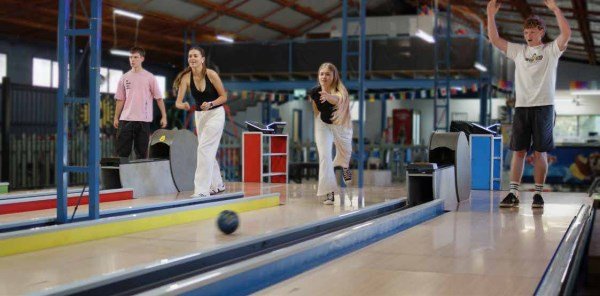
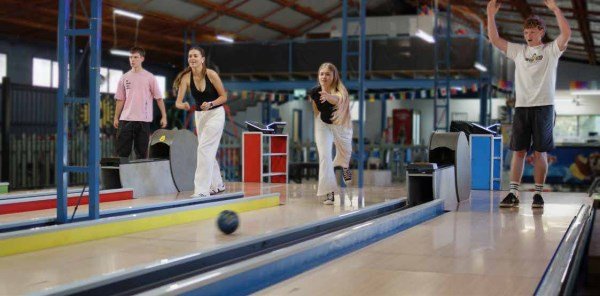
When it comes to luxury home inclusions, few features deliver the same blend of spectacle, usability and long-term enjoyment as a private bowling lane. It is the kind of installation that shifts a home from impressive to unforgettable. More than a novelty, a well-designed residential lane becomes the centre of the entertainment space, where guests gather, compete and unwind.
For architects and builders, the appeal runs deeper than spectacle. High-end homes increasingly include expansive basements, detached pavilions, oversized garages and generous recreation zones. The challenge is rarely space. It is purpose. Bars, theatres and games rooms are expected inclusions. A bowling lane is experiential. It is active rather than passive, works across generations and functions in all weather conditions. Like a chef’s kitchen anchors the home of a serious cook, a bowling lane anchors the home of someone who truly enjoys entertaining.
Importantly, modern residential systems bear little resemblance to the noisy, power-hungry commercial centres many people remember. Advances in string pinsetter technology, material finishes and software integration have made today’s installations quieter, dramatically more energy efficient and far easier to maintain. What was once considered commercial infrastructure is now a refined architectural inclusion suited to private homes.
Space and structural realities
Space is naturally the first consideration and often where misconceptions begin.
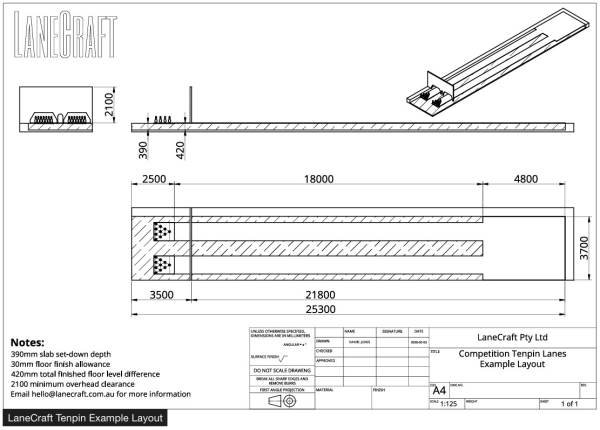
A bowling installation comprises three core components: the approach, the lane deck and the machine room housing the pinsetter and mechanical systems. A pair of regulation tenpin lanes requires approximately 25.3 metres in length and 3.7 metres in width. Regulation play specifies 60 feet or 18.29 metres from foul line to head pin, with a minimum 15-foot approach.
In practice, we typically allow around 4.8 metres for the approach, 18 metres for the lane deck and 2.5 metres for the machine area. Each lane measures approximately 1.7 metres wide including gutters and bumpers, with a 300mm ball return positioned between paired lanes.
However, most residential clients are not training for competition. Much like installing an Olympic-length swimming pool, regulation scale is impressive but not always necessary. By transitioning to smaller German 9-pin balls, which are lighter and more compact than traditional tenpin balls, the required lane length can be reduced to approximately 18 metres in total. A 12-metre lane combined with a 3.5-metre approach and machine area retains challenge and enjoyment while dramatically improving feasibility within residential footprints. That reduction alone often determines whether a project proceeds or is dismissed early.
Ceiling height can be more critical than length. Approximately 420mm is required beneath the finished lane structure to accommodate mechanical components and services, along with a minimum ceiling clearance of 2.1 metres above the lane surface. The most effective solution is a slab set-down incorporated during construction, allowing the lane to sit flush with surrounding finishes. This maintains clean architectural lines and enables the approach to integrate with adjacent bar, lounge or games areas rather than appearing as an isolated feature.
From a structural perspective, requirements are generally straightforward. The heaviest individual component, the pinsetter, weighs approximately 300 kilograms and is concentrated within the machine room. Standard residential concrete slabs typically accommodate this comfortably. Installations on upper levels do require engineering verification, but loads are modest compared to many other luxury inclusions such as stone features, spas or large aquariums. The perception that bowling lanes are structurally prohibitive is often unfounded.
Energy efficiency and practicality
Electrical demand is another area where outdated assumptions persist. Each lane operates via a 400-watt motor, and a two-lane system draws less power when running than a standard electric kettle.
Modern string pinsetters activate only during pin resets and consume minimal energy outside of active play. Older free-fall systems could run continuously at 15 to 20 kilowatts. Contemporary systems operate at a fraction of that consumption. The efficiency gains are substantial and one of the key reasons residential installations are now genuinely practical from both cost and sustainability perspectives.
Noise levels are also significantly reduced compared to older systems. Fewer moving parts and more efficient motors contribute to a quieter operating environment, an important consideration in homes where entertainment spaces sit adjacent to living areas or bedrooms.
Planning and coordination
The optimal time to engage a bowling specialist is during early design development. Incorporating slab set-downs, structural allowances, electrical circuits, data runs and AV integration at drawing stage avoids unnecessary retrofitting and ensures seamless execution.
Because equipment is manufactured to order in Germany, typical lead times are approximately three months including shipping, although this can vary depending on production schedules. Installation is generally scheduled as late as possible in the construction timeline, but prior to final flooring installation. Ideally, HVAC systems are operational before the lane is installed so temperature and humidity levels are stable, ensuring dimensional precision and long-term performance.
Installation itself typically takes around three weeks, including commissioning, calibration and initial servicing. This phased approach ensures the system is delivered in peak operating condition and fully tested before handover.
Software as part of the architecture
An often overlooked aspect of residential bowling lanes is software.
Traditional bowling systems were designed for commercial centres focused on league management, tournament scoring and booking systems. In a luxury home environment, where lighting, climate control and audiovisual systems are integrated and carefully curated, the bowling interface becomes part of the overall design language. If it feels like commercial equipment transplanted into a residential space, usage often declines.
Purpose-built software allows custom visual themes, integration with home automation systems and access to multiple game formats suited to private entertainment. Lighting scenes can change during play, music can integrate with scoring events and display screens can reflect the broader aesthetic of the home. With more than fifteen game modes and the ability to develop custom formats, the experience becomes adaptable to different audiences and occasions rather than fixed to traditional scoring formats.
Indicative investment
Every installation is tailored to the architecture of the space and the level of systems integration involved, so final pricing depends on project specifics. As a general guide, single-lane systems start from $92,000, while double-lane systems generally begin at $139,500.
In context, this positions a bowling lane alongside other premium lifestyle inclusions such as a high-end home theatre or a modest swimming pool. Ongoing operating costs are typically lower than those associated with a pool, particularly when modern energy-efficient systems are specified.
Selecting the right partner
For builders and architects, accountability is critical. A bowling lane combines structural coordination, mechanical systems, specialist installation and customised software. A single point of responsibility across supply, installation and ongoing support reduces complexity and protects your reputation with the client.
Bowling lanes are mechanical systems and require periodic servicing. Claims that systems never require maintenance are unrealistic. Strong after-sales support and local technical expertise are essential. While some providers rely heavily on overseas specialists, cohesive local installation and software teams provide clarity, responsiveness and long-term confidence.
A refined residential approach
At LaneCraft, bowling is positioned not as scaled-down commercial equipment, but as a refined residential experience. Systems are engineered specifically for homes and boutique venues, using German-manufactured string technology with fewer moving parts and significantly lower energy consumption than traditional free-fall systems.
Where commercial centres often use pneumatic bumpers requiring compressors and ongoing moisture maintenance, electric actuation provides quieter operation and simplified servicing. Modern high-pressure laminate lane surfaces eliminate the sanding, oiling and refinishing associated with traditional timber lanes. Maintenance is reduced to periodic cleaning and annual mechanical servicing to keep the system performing at its peak.
The result is a technically robust system that integrates cleanly into architectural projects and remains practical to own.
A well-executed residential bowling lane becomes more than a feature. It becomes part of how the home is used, how families gather and how guests remember the space. Early engagement provides the flexibility to integrate it seamlessly into design and construction, transforming excess space into a defining architectural statement.
For projects in planning or early design stages, an initial feasibility discussion can clarify spatial requirements, budget expectations and integration pathways.