

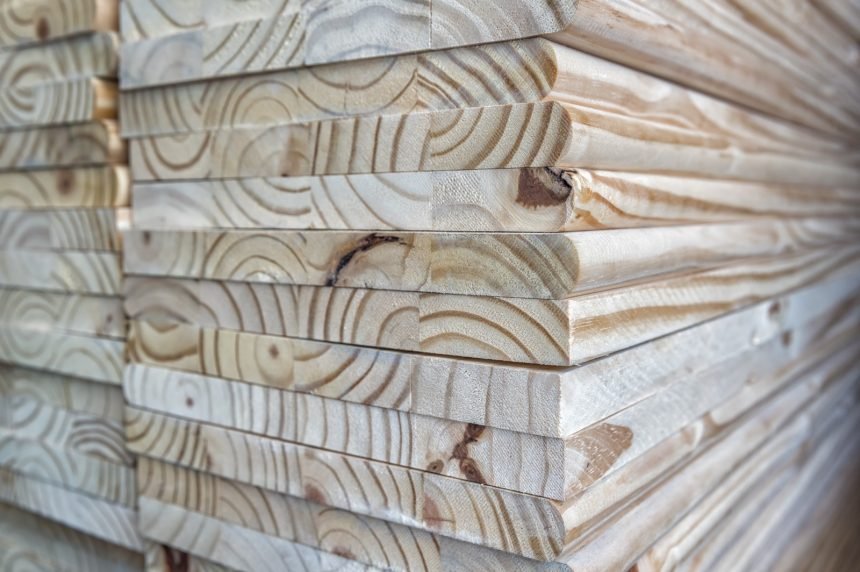
The construction sector accounts for nearly a quarter of Australia’s greenhouse gas emissions. You read that number correctly, 25% of our national carbon footprint comes from how we build. If you’re specifying materials for projects right now, you’re making decisions that will either accelerate or slow that trajectory. Cross-Laminated Timber (CLT) offers a different path forward. This isn’t about greenwashing or incremental improvements. The data shows CLT can reduce carbon footprints by 40% compared to conventional steel and concrete construction in multi-story buildings. More striking, traditional buildings emit approximately 2,000 metric tons of CO2. CLT structures can sequester 2,000 tons instead of emitting them. The material stores carbon rather than releasing it.
The Market Is Moving Faster Than You Think
The Australia and New Zealand CLT market was valued at USD 125.7 million in 2024. By 2033, projections put it at USD 563.6 million, a compound annual growth rate of 18.14%. That’s a 350% market expansion in less than a decade. You’re watching one of the fastest-growing sectors in Australian construction unfold in real time. In March 2024, Timberlink opened its $70 million NeXTimber facility in Tarpeena, South Australia. The facility manufactures cross-laminated and glue-laminated timber from local radiata pine. Australia is transitioning from import dependency to domestic production capability. This shift matters for your project timelines, material availability, and cost predictability. When T3 Collingwood received recognition as Australia’s leading commercial timber office building at the Australian Timber Design Awards in October 2024, it signalled something beyond industry accolades. The 15-story mass timber structure demonstrated that CLT works at scale in commercial applications.
The Regulatory Environment Is Tightening
In December 2024, the Green Building Council of Australia endorsed the National Urban Policy, highlighting CLT’s role in sustainable city development. The material is now positioned as key to achieving carbon reduction targets in urban construction projects. Starting in 2025, New Zealand will be enforcing mandatory carbon counting for construction projects. Architects and builders must integrate carbon assessments and use verified materials to meet new regulations. Australia will follow similar patterns. The question isn’t whether carbon accounting becomes mandatory, it’s when. Projects you specify today will face scrutiny tomorrow. CLT provides documentation and performance data that stand up to regulatory requirements. You can get ahead of compliance issues or scramble to meet them later.
Construction Efficiency Changes Your Bottom Line
CLT’s lightweight characteristics allow elevated construction with reduced foundations. You minimise excavation, site disturbance, and environmental impact from the start. Prefabrication of CLT structures enables rapid construction with reduced traffic, waste, noise, and dust pollution on site. John Metras, Managing Director of Infrastructure Development at UBC, noted regarding Vancouver’s Brock Commons Tallwood House, “We found that working with wood, we could reduce timelines for construction. The assembly of the wood structure went up incredibly quickly, faster than we even expected.” Faster construction means lower labour costs, reduced site overhead, and earlier project completion. Melbourne’s Forte Living apartment building in Docklands was Australia’s first mass-timber high-rise apartment building. At 32 meters tall, it held the title of world’s tallest timber residential building when constructed in 2012. The project demonstrated that CLT works in Australian conditions with Australian trades.
– Advertisement –
The Carbon Cycle Actually Works
Australian sustainable softwood plantations regenerate the timber used in building structures in hours, not years or decades. Hours. When that timber grows, it absorbs CO2 and releases oxygen. The Atlassian HQ in Sydney will be the world’s tallest hybrid timber building, a 40-story structure combining CLT and steel that achieves a 50% reduction in embodied carbon compared to conventional construction methods. This isn’t theoretical sustainability. The building will sequester carbon while standing and can be deconstructed and recycled at end-of-life. Compare that to concrete, which continues releasing carbon for decades after placement, or steel, which requires massive energy inputs for production and recycling.
What This Means for Your Next Specification
Construction’s environmental impact isn’t someone else’s problem. The sector contributes 18.1% of Australia’s carbon footprint when you account for embodied carbon in materials. You have options now that didn’t exist five years ago. CLT provides structural performance, fire resistance, and acoustic properties that meet building codes. The material offers design flexibility for complex geometries and large spans. Prefabrication reduces on-site labour requirements and construction timelines. The cost premium that once made CLT prohibitive is narrowing as domestic production scales up. You’re not sacrificing performance or budget to reduce environmental impact. The trade-offs that used to define sustainable construction are disappearing.
The Industry Is Already Moving
Major developers like Hines Global Real Estate are committing to mass timber construction in major cities. Government policy is aligning with carbon reduction targets. Material availability is increasing through domestic production. The question you need to answer: Will your next project contribute to the 25% of emissions coming from construction, or will it demonstrate what’s possible when you specify materials differently? CLT isn’t the only answer to construction’s carbon problem. But it’s a proven answer that’s available now, with growing supply chains, regulatory support, and demonstrated performance in Australian conditions. The projects being specified today will define Australia’s built environment for the next 50 years. You’re making those decisions right now. The data support CLT. The market is moving toward it. The regulatory environment will require it. What you specify next matters more than you think.