In August 2020, Standards Australia released an amendment to AS/NZS 5131 and a new revision of AS 4100. These two standards work together to provide detailed guidance for the design, fabrication and erection of steel structures in Australia. Understanding the changes to these standards and the implications for all members of the structural steel supply chain is important to realise positive outcomes for all involved.
Context of Regulation
Australia’s steel structure design standard AS 4100 was updated in 1998. This standard covered all aspects of steel design, fabrication and erection, with the latter two areas covered by only two sections.
This was insufficient compared to the USA, Canada, EU and the UK which each have detailed, stand-alone standards covering fabrication and erection. In 2016, Standards Australia released AS/NZS 5131 Structural Steelwork – Fabrication and Erection to keep Australian standards and engineering in line with internationally recognised best practice and regulation. Previously, AS/NZS 5131 was not directly referenced by AS 4100, leading to some industry stakeholders not considering this standard legal under the National Construction Code (NCC). The principal reason for revising AS 4100 was to directly reference AS/NZS 5131, making it compulsory for fabrication and erection (especially for bolting installation). The final step that brought this regulation together was the 2022 update of the NCC (adopted by all states and territories in May 2023) that referenced AS 4100:2020, making AS/NZS 5131 a secondary reference under the NCC.
STANDARDS RELATED TO STEEL STRUCTURE DESIGN, FABRICATION AND ERECTION
AS 4100: 2020 – Steel Structures
• Provides the minimum design requirements for steel structures.
• Primary reference under the NCC.
• References AS/NZS 5131 for fabrication and erection.
• Includes reference to ‘Construction Categories’.
AS/NZS 5100.6: 2017 – Bridge Design Part 6 Steel and Composite Construction
• Provides the minimum design requirements for structural steelwork in bridges.
• Primary reference under the NCC.
• References AS/NZS 5131 for fabrication and erection.
• Includes reference to ‘Construction Categories’.
AS/NZS 5131: 2016 Structural Steelwork Fabrication and Erection
• Provides minimum requirements for fabrication and erection of structural steelwork.
• Secondary reference under NCC (2022).
• Referenced by AS4100:2020 and AS/ NZS5100.6:2017.
• Includes reference to ‘Construction Categories’.
Revisions to AS 4100:2020
Fabrication and erection: while previously covered in sections of AS 4100:1998, it now directly references AS/NZS 5131:2016, making its use mandatory.
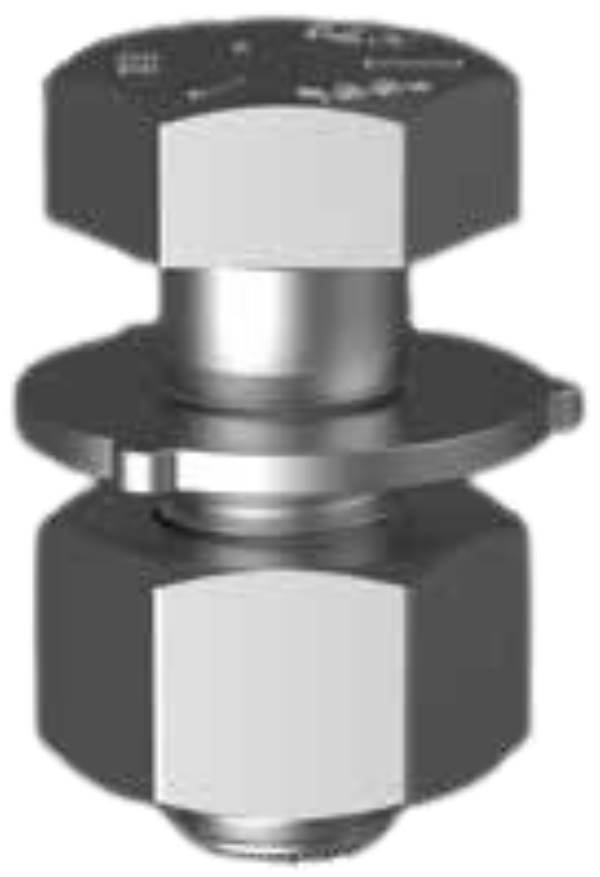
High strength bolts: AS 4100 aligns with AS/NZS 1252: 2016 and the introduction of EN 14399 Type HR PC8.8 as ‘alternative assembly types’ and PC10.9 as ‘additional assembly types’. Design requirements for 10.9 for all tension categories (S/TF/TB) and minimum tensions for 10.9 are included. Bolt tensioning and inspection is referred to AS/NZS 5131, guiding the use of specialty fasteners such as Blind Bolts (HBS Bolts), Swage Bolts and shear-off type tension controlled bolts EN 14399-10 HRC (TCBOLTS).
Implications for Structural Bolting
Although many of these changes were made in the 2016 revisions of AS/NZS 1252 and AS/NZS 5131, the direct reference in AS 4100 validates their use. There is expected to be increased specification and use of 10.9 structural and specialty fasteners, such as the K2 and shear off type TCBOLTS used widely in the US and European markets.
Alternative Assembly Type – EN 14399-3 8.8 HR
AS/NZS 1252 nominates products manufactured to EN 14399 8.8 HR as an alternative assembly and may be used where AS/NZS 1252 is specified. It is important to note that ‘System HR’ type assemblies are the only alternative and ‘System HV’ assemblies made to EN 14399-4 should not be used as alternatives to AS/NZS 1252 assemblies.
‘System HV’ assemblies may be in the Australian market and all stakeholders should be wary if they come across them, even if specified or supplied.
Additional Assembly Type – EN 14399-3 10.9 HR
AS/NZS 1252 does not have specifications for 10.9 products, instead, it nominates EN 14399-3 10.9 HR as an additional assembly type to be used where AS/NZS 1252 10.9 assemblies are specified. AS 4100 refers to all 10.9 assemblies required to conform to AS 1252. As 10.9 is not covered by AS/NZS 1252, the Euronorm standard is relied on for compliance. EN 14399-10 HRC assemblies (colloquially known as TCBolts) are accepted as additional assembly types.
Bolting Category 10.9/S (Snug Tight Condition)
AS 4100 allows the use of AS/NZS 1110 bolts for bolting categories 4.6/S and 8.8/S, in which bolts are only snug tight. AS 4100 states that bolting category 10.9/S must use the AS/NZS 1252 (EN 14399) standard products for snug tightening. In the past, many fabricators have supplied and used AS/NZS 1110 products for 10.9 assemblies in snug tight or fully tensioned conditions. This will no longer be acceptable under the standard.
AS/NZS 1252.1 and Reference to EN 14399
AS 4100 does not directly reference EN 14399 for PC 10.9 bolting assemblies. With the current edition of AS/NZS 1252, any PC 10.9 bolting assemblies will be made to the EN 14399 standard and supplied in packaging labelled accordingly. This may be confusing for end users who are unfamiliar with these standards and the alternative and additional assembly types. Standards Australia has kept the reference to AS/NZS 1252 in preparation for PC 10.9 bolting assemblies to be directly included in future updates of AS/NZS 1252.
Weathering Steel Assemblies
With the inclusion of weathering steel in AS 4100, appropriate bolting assemblies should be specified in accordance with AS/NZS 5131. Hobson Engineering is the first company in Australia to supply weathering steel bolts in metric, with quality documentation aligned with the requirements of Australia and New Zealand’s structural bolting standards.
Hobson Engineering
• First in Australia to begin independent batch testing in NATA Lab of heat-treated product (2006)
• First in Australia to offer test certificates and NATA reports fully traceable and downloaded from our website (2006)
• First in Australia to stock Squirter washers / Skidmore machines (2007)
• First in Australia to fully support and stock AS1252:2016 ‘k0’ and ‘k2’ (2017)
• First in Australia to stock 10.9 structural (2020)
• First in Australia to stock weathering Steel (2022)