

In a rapidly changi ng world, we need a new normal when it comes to housing in Australia. Climate change and economic uncertainty pose significant challenges for homeowners, developers, and builders alike. Yet, current housing benchmarks fall short—they meet only basic needs without addressing critical issues like sustainability, mental and physical wellbeing, and building longevity. Now more than ever, it’s crucial to rethink our approach to housing to meet these multifaceted challenges head-on.
“We need to reimagine our habitat, both in how it works for us and how it works in the rest of the world,” says Michael Drage, founder of three businesses—reimagined habitat, Net Zero Plus and Efficient Habitat —that are helping to build for the future. “Our vision is to democratise healthy, beautiful and energy-efficient homes.”
Why do we need energy-efficient homes?
Australia’s commitment to reducing greenhouse gas emissions aligns with a growing demand for homes that meet sustainability standards. As the effects of climate change become more felt, resilient, energy-efficient homes are a forward-thinking investment. Quality construction, moisture control, and superior insulation not only enhance durability, but also reduce future maintenance costs.
For a homeowner, the benefits are immeasurable. Beyond future-proofing your property investment, the more efficient a home, the less energy you will need to power it. This not only lowers energy costs, but a home’s carbon footprint too. With effective insulation, solar panels, and airtight construction, energy-efficient homes can significantly reduce—or even eliminate—energy bills while maintaining a stable year-round temperature. Improved indoor air quality and reduced exposure to pollutants is good news for your health and wellbeing, too.
Simplifying the science of energyefficient homes
A Passive House is the gold standard of eco-living — engineered to use up to 90% less energy for heating and cooling compared to traditional buildings. The motivating idea behind Passive House is centred on optimising all the energy relevant components such as the building envelope, the windows and doors, airtightness, the ventilation, heating and hot water, and electricity supply.
While other systems set up goals and parameters as a guide to eco-friendly design, following the principles of Passive Houses means that buildings are designed not only to ensure that they reach their targets, but also act as an inbuilt guarantee of the building’s post construction performance. Holistic design, just like a living, breathing organism, ensures everything is connected.
Designed by academics, improved by architects, scientists, and builders, the learnings from the science and methodology developed over the last 30 years can be used to inform the thinking for all buildings — not just for those who wish to build to Passive House standards. “The science behind Passive House informs all of the thinking within the three businesses,” says Drage.
A circular solution:
From the design to the materials To maximise the benefits of sustainable housing, a three-pronged strategy is essential. Innovative design, thorough energy analysis, and the use of high-performance products and materials can dramatically enhance a home’s performance. reimagined habitat, Efficient Habitat, and Net Zero Plus come together to create a comprehensive solution that addresses the key environmental challenges of the Australian housing market. Together, they form an integrated, circular approach that tackles every aspect—from design and energy efficiency to construction.
Building a holistically-designed home
As the demand for sustainable and visually appealing homes grows in Australia, homeowners are seeking solutions that offer both energy efficiency and comfort. Our extreme climate conditions make it essential for homes to maintain thermal comfort throughout the year. But it’s not just about energy efficiency; poor insulation can have serious health implications and profoundly affect our quality of life. Similarly, an airtight house without proper ventilation can lead to indoor air quality issues. A truly great home is more than the sum of its parts—it’s about how those parts work together seamlessly. With regulatory pressures pushing builders toward higher sustainability standards, holistic home design has become a pivotal issue in today’s housing market
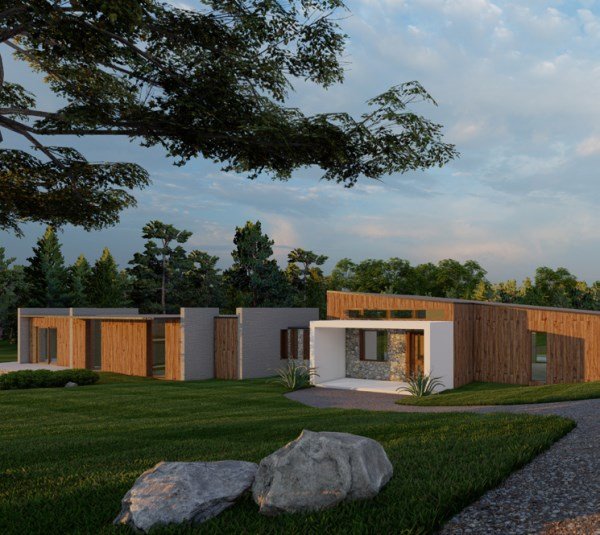
The Solution: reimagined habitat reimagined habitat is a design firm rethinking the way homes are designed and built. By drawing on the science behind Passive House principles, reimagined habitat crafts homes specifically optimised for Australia’s diverse climates. “We look at design as both an art form and a science,” explains Drage, “and that balance allows us to create homes that not only look beautiful but also function to the highest environmental standards.”
The company specialises in designing homes that strike the perfect balance between aesthetics and efficiency. By using cutting-edge materials and design techniques, it ensures that homes don’t just comply with sustainability regulations—they set new benchmarks for eco-friendly living. The team’s holistic approach results in homes that are not only thermally comfortable but also reduce energy consumption and greenhouse gas emissions, making a significant impact on both the homeowner’s wallet and the environment.
Ensuring energy efficiency
As energy prices continue to rise and regulations like the new 7 Star minimum for NatHERS become law, builders are facing significant challenges in meeting these higher efficiency standards. Large-scale builders, in particular, often find it difficult to strike the right balance between cost, client expectations, and regulatory compliance. Addressing this gap is crucial for driving broader adoption of energy-efficient building practices.
The Solution: Efficient Habitat
It’s vital to ensure that building designs meet the highest energy efficiency standards. Efficient Habitat was founded to meet this challenge, offering comprehensive research, energy analysis, and consultation services.
Efficient Habitat’s team of experts provides advice not just from an energy or regulatory perspective but also with a deep understanding of design and construction. Their consultants are designers and builders who work alongside clients to ensure that the energy-saving measures recommended are practical and effective.
From calculating the thermal performance of new builds to recommending energy-efficient upgrades for renovations, Efficient Habitat advises clients on how to comply with Australian energy standards while keeping projects financially viable. Whether it’s basic NatHERS or BASIX compliance advice and certification, coaching on how to get to much higher performance standards, or doing complete Passive House modelling and analysis, the team draws on the learnings from tens of thousands of modelling scenarios to cut through to get the outcomes you are looking for. This allows builders to focus on what they do best—creating great homes—while ensuring that they meet and exceed all regulatory requirements.
Combining speed and sustainability
The push for more energy-efficient homes is often met with another demand: speed. In Australia’s competitive housing market, builders are tasked with delivering homes quickly and affordably, without sacrificing quality or sustainability. This is especially challenging when ensuring homes are resilient to Australia’s climate extremes
The Solution: Net Zero Plus Prefabricated Systems and High-Performance Windows and Doors
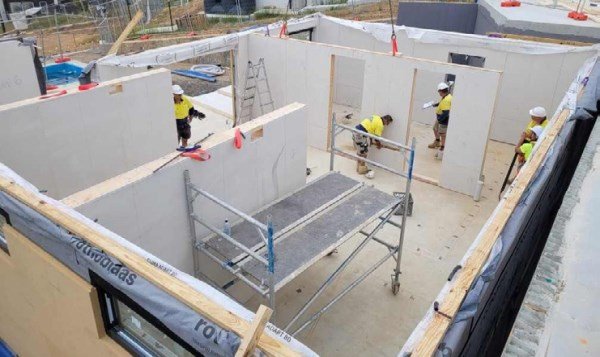
Advances in building technologies in Europe over the last 30 years have revolutionised how homes are constructed. Best practices now involve factory-built components, using the latest machinery to create panels, windows, and doors to precise standards—ensuring quality and accuracy while minimising waste.
At the core of Net Zero Plus’s approach is the use of prefabricated systems that streamline construction and enhance energy performance. Their prefabricated panels are designed for rapid assembly, significantly reducing build times. These systems achieve airtightness and high insulation levels far more efficiently than traditional construction methods.
These panels are not only quick to assemble but are also optimised for thermal efficiency, ensuring homes maintain comfortable indoor temperatures with minimal reliance on heating or cooling systems. This directly contributes to lower energy consumption and a smaller environmental footprint.

“Just by changing the window glazing, a client of ours went from 2.9 to 6.9 stars in performance”
Michael Drage, founder of reimagined habitat, Net Zero Plus and Efficient Habitat
Net Zero Plus also provides high-performance windows and doors that are integral to achieving these efficiency goals. Openings like windows and doors are often the weakest links in a home’s energy performance, but Net Zero Plus’s high-performance, European-made window and door systems transform comfort levels and overall home performance. You can choose the right windows and doors to meet your home’s specific performance requirements or select profiles that suit your aesthetic preferences, knowing that these products will thermally outperform 95% of Australian-made windows and doors. As Drage says, “Just by changing the window glazing, a client of ours went from 2.9 to 6.9 stars in performance.”
Contact us now to start your journey Together, reimagined habitat, Efficient Habitat, and Net Zero Plus offer a comprehensive, circular solution for creating high-performance homes in Australia. Each company specialises in a crucial stage of the process—design, energy analysis, and construction—ensuring that your new home is not only beautiful but also sustainable, healthy and energy-efficient.
Ready to start your journey toward a stunning, eco-friendly home? Contact us today. Your consultation is free!
Reimagined Habitat: reimaginedhabitat.com.au
Efficient Habitat: efficienthabitat.com.au
Net Zero Plus: netzeroplus.com.au

Get in Touch:
Phone: +61 862 856 150
Email: info@netzeroplus.com.au